
With Virginia Western’s attention focused on rapid response to industry needs, the College fulfills a unique niche in the region’s higher education and economic development landscape. Virginia Western would like to share the following article authored by the Roanoke Regional Partnership highlighting the success that comes with regional entities working in tandem to advance economic development goals:
How the Roanoke Region’s Innovation Ecosystem Helped Land RINGANA
When executives from RINGANA, the Austrian life sciences company known for its preservative-free skincare and nutrition products, began scouting for their first North American headquarters, they were vetting locations against a long list of criteria.
Like many companies visiting for the first time, RINGANA leaders were impressed by the beauty of the region. Many foreign investors from parts of Europe, including Italy and Austria, say the Blue Ridge Mountain landscape and Tudor-style architecture remind them of home. But one factor mattered more than scenery: could Roanoke attract the global PhD-level talent a brand like RINGANA needs to succeed?
When that question was posed to the Roanoke Regional Partnership and City of Roanoke teams, they knew exactly how to answer.
Fralin Biomedical Research Institute (FBRI) is a Market Differentiator
Companies making long-term investments want to know they can recruit exceptional talent and continue to innovate… we’ve done that.
Home to world-class scientists, physicians, researchers, and graduate students from around the globe, the Fralin Biomedical Research Institute at VTC has become one of the Roanoke Region’s most important economic development assets. Founded in 2010, the institute has grown to nearly 700 faculty, staff, students, and trainees, backed by over $225 million in research funding from outside the university, and has helped establish the region as a globally connected center for research and innovation.
While its work is often associated with scientific breakthroughs, FBRI tells an even larger story about the community itself. It showcases the kind of intellectual capital, sophistication, and culture of innovation that companies increasingly seek when making long-term investment decisions.
“Site selectors and business prospects expect to be impressed by the labs and facilities, and they are,” said John Hull, president and CEO of the Roanoke Regional Partnership. “What surprises them is the people. Time and again, our visitors leave talking about the caliber of talent they’ve found here in Roanoke. FBRI’s credentials speak for themselves, but those one-on-one conversations with leadership and the internationally diverse talent working there leave a lasting impression.”
Under the leadership of Dr. Michael Friedlander, who joined the institute as its founding executive director and also serves as Virginia Tech’s vice president for health sciences and technology, FBRI has transformed into one of the nation’s fastest-growing academic biomedical research institutions, attracting research and innovation talent including faculty, staff and students from around the nation and world to pursue groundbreaking, team-based discoveries in neuroscience, cancer research, and cardiovascular and metabolic disease and to translate those discoveries into meaningful applications to improve health and quality of lives.
“Companies making long-term investments want to know they can recruit exceptional talent and continue to innovate. At the Fralin Biomedical Research Institute at VTC, we’ve done that,” Friedlander said. “We were able to demonstrate that the region has built a research ecosystem that not only attracts but celebrates scientists, physicians, engineers, and entrepreneurs from around the world. That talent base isn’t hypothetical — it’s here now, and it’s still growing.”
Whenever prospective companies visit the region, Friedlander is often among the first people willing to sit down and share that story, welcoming executives and site selectors into the institute to experience firsthand the caliber of work taking place in Roanoke.
Friedlander believes the partnerships with Virginia Tech, Carilion Clinic, industry, city and state government, and other local colleges and universities help make Roanoke competitive with much larger metropolitan areas when companies evaluate locations for highly educated and technically skilled workers.
For companies like RINGANA, seeing that talent ecosystem firsthand changes perceptions in ways presentations and workforce reports cannot. Fralin Biomedical may have started the conversation, but it did not stand alone.
Proof Points: An Ecosystem to Back It Up
Companies don’t choose communities because of a single building or institution. They choose places where research, workforce development, entrepreneurship, and industry are already working together. That’s what RINGANA saw in Roanoke.
Over the last decade, the City of Roanoke has been a catalyst in the growth of the Innovation Corridor, investing alongside regional partners to create an ecosystem where research, workforce development, entrepreneurship, and commercialization reinforce one another.
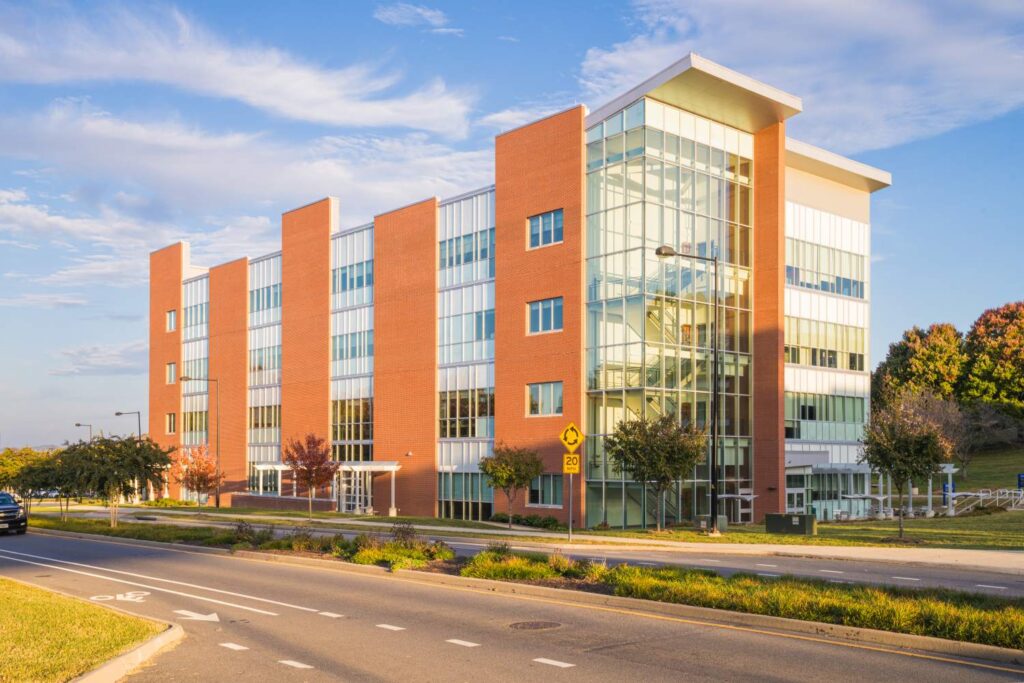
That broader story became clearer as RINGANA leaders visited Virginia Western Community College‘s STEM building, where Dean of STEM Amy White showcased the college’s advanced training facilities and demonstrated its ability to develop workforce solutions tailored to regional employers’ needs.
“At Virginia Western, we move at the speed of business,” White said. “When an employer like RINGANA outlines their needs, we immediately adapt curriculum and develop new workforce solutions to meet the certification and credential needs their future workforce requires. It is important for us to not only showcase what we offer but to actively listen to what our industry partners need.” White highlighted programs such as Virginia Western’s biotechnology and mechatronics curricula, multiple industry certifications, and specialized training opportunities that are uncommon among community colleges and particularly relevant for companies operating at the intersection of life sciences and advanced manufacturing.
For a company preparing to establish manufacturing, distribution, and research operations in the United States, those conversations mattered. They reinforced what RINGANA leaders had already begun to see at FBRI: this was not a region with a single impressive institution, but an interconnected ecosystem intentionally designed to support innovation and growth.
And that ecosystem continues to expand.
RoVa Labs, the 40,000-square-foot wet lab and biotechnology incubator, is creating new opportunities for startups and life sciences companies to grow in the region. Supporting that ecosystem are programs like Carilion Innovation, Usability Works, and RAMP, which provide the commercialization, testing, mentorship, and capital support necessary to help ideas become companies.
“Companies don’t choose communities because of a single building or institution,” Hull said. “They choose places where research, workforce development, entrepreneurship, and industry are already working together. That’s what RINGANA saw in Roanoke.”
Questions Answered and a Win for Roanoke
RINGANA executives arrived looking for a location that could support manufacturing, distribution, research, and long-term growth. They found that AND a community where research institutions, educational partners, healthcare organizations, entrepreneurs, and economic development leaders are working together to build something larger than any one project.
For the Roanoke Region, the announcement of RINGANA’s $85 million investment and 435 new jobs is certainly worth celebrating (in fact, it’s the largest foreign direct investment in the region’s history). It also serves as validation of a strategy years in the making: investments in research, talent, and innovation will yield economic results. Individually, these assets told an impressive story. Collectively, they helped bring a new business to our region and secure economic prosperity for the future.


