

By Allison Taylor
While hundreds of drivers pass the Community Arboretum’s vibrant flower beds on Colonial Avenue each day, and many local families have enjoyed the gardens as a scenic location for weddings, proms, photography sessions and other events, few people may realize how much the be-loved landmark depends on community support to maintain its beauty and educational potential.
The Arboretum, which spans two acres on the campus of Virginia Western Community College, does not receive state funding for upkeep of the gardens. Charitable donations, volunteer efforts and plant sales help pay for site improvements and day-to-day operations of the Arboretum.
“The plant sales give the community an opportunity to purchase locally grown plants for a good cause, and they also promote education,” said Clark BeCraft, Horticulture Program Head.
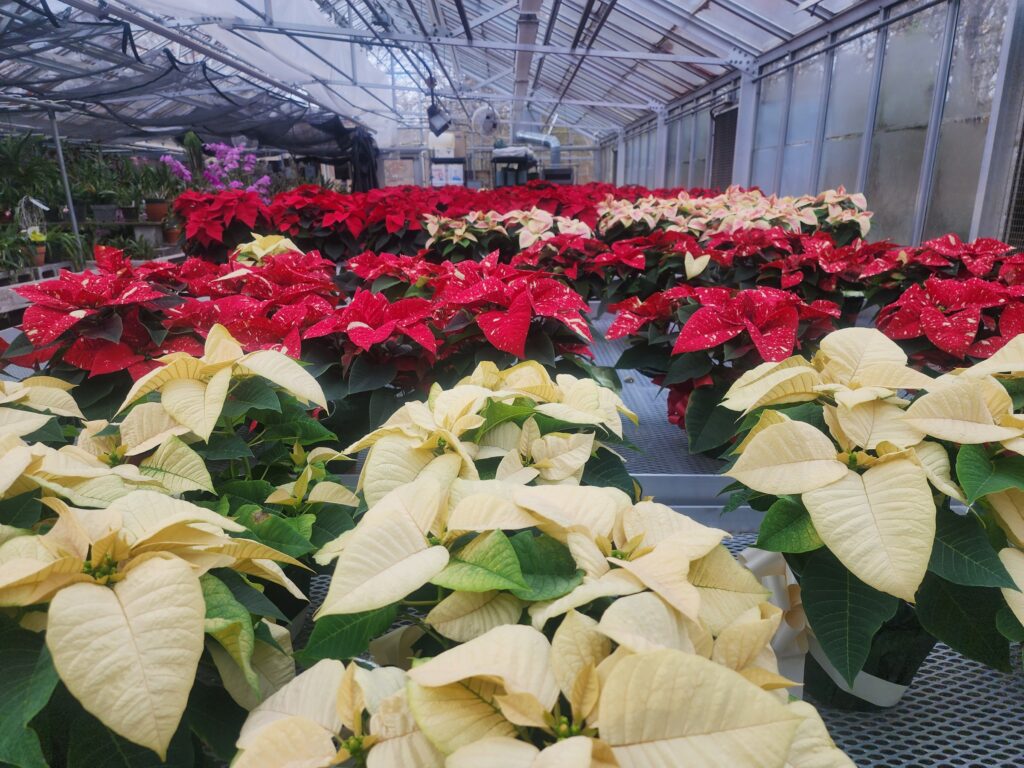
There are four plant sales each year, generally on the same seasonal schedule: a spring perennial sale in early April, a spring bedding and vegetable sale in early May, a fall pansy and perennial sale in mid-September and a poinsettia sale in early December. All sales take place at the Virginia Western Greenhouse and Natural Science Center and its parking lot.
The sales are first-come, first-served, and plants often sell out within hours. Longtime customers are recognized by name, and many return year after year, sometimes bringing friends and family members. The sales also introduce customers to the lesser-known areas of the Arboretum that are not as easily visible to passerby as the sections seen along Colonial Avenue.
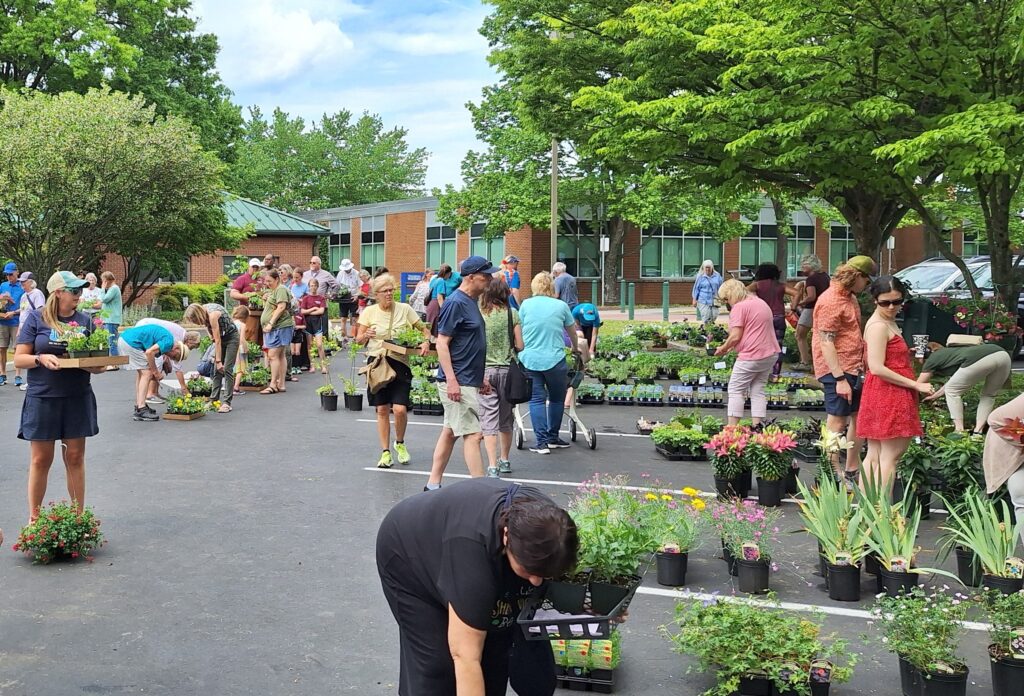
All plant sales are sponsored by the Horticulture Club, which uses its own funds to purchase the materials used for the sales. Proceeds from the plant sales then go directly to the Horticulture Club, which uses them to fund the purchase of essential supplies for the gardens like soil, pots, seeds and starter plants in addition to the general maintenance and ongoing improvement of the Arboretum. Each year, Horticulture Club members vote on which projects and initiatives the funds will go toward.
Every plant sale takes many months of preparation and planning. The plants’ growing schedule is built around the sale dates, working backwards from the necessary finish date. Seeds, starter plants and cuttings are ordered months in advance; for example, the poinsettias sold in December are ordered in March. Plants are grown from seeds when possible, as it is more cost effective and they can be grown in propagation benches. When seeds aren’t practical, starter plants as well as patented cuttings are sourced, mostly from Virginia and Michigan.
Each of the four plant sales has standard offerings based on the season, but which plants end up for sale is also influenced by which plants are currently growing in the Arboretum. While every addition to the gardens is well-researched and carefully considered, plant selection is also partially determined by the Arboretum’s participation in the All-America Selections (AAS) pro-gram each year. Seeds and starter plants are donated annually by the program, and then the resulting plants are featured in both the garden displays and plant sales. The Arboretum also submits its landscape designs, which are chosen according to each year’s theme, to national contests as part of the program.
“We grow enough, depending on what kind of gardener you are — indoor or outdoor, perennial or annual, container plants — we try to have something for everyone,” said Tonya Judd, Horticulture Technician. “Even if you don’t have a yard, you can have a pot on your front steps.”
In preparation for each sale, Arboretum interns, Horticulture Club members and Community College Access Program (CCAP) student volunteers assist with plant care and preparation, setup of the sale, and customer service. In addition to teaching plant propagation and watering techniques, plant sales give students and interns an opportunity for hands-on experience in retail customer service through interacting with the sales’ patrons. This can be a valuable experience for students, as many careers in the horticulture field involve a customer service aspect.
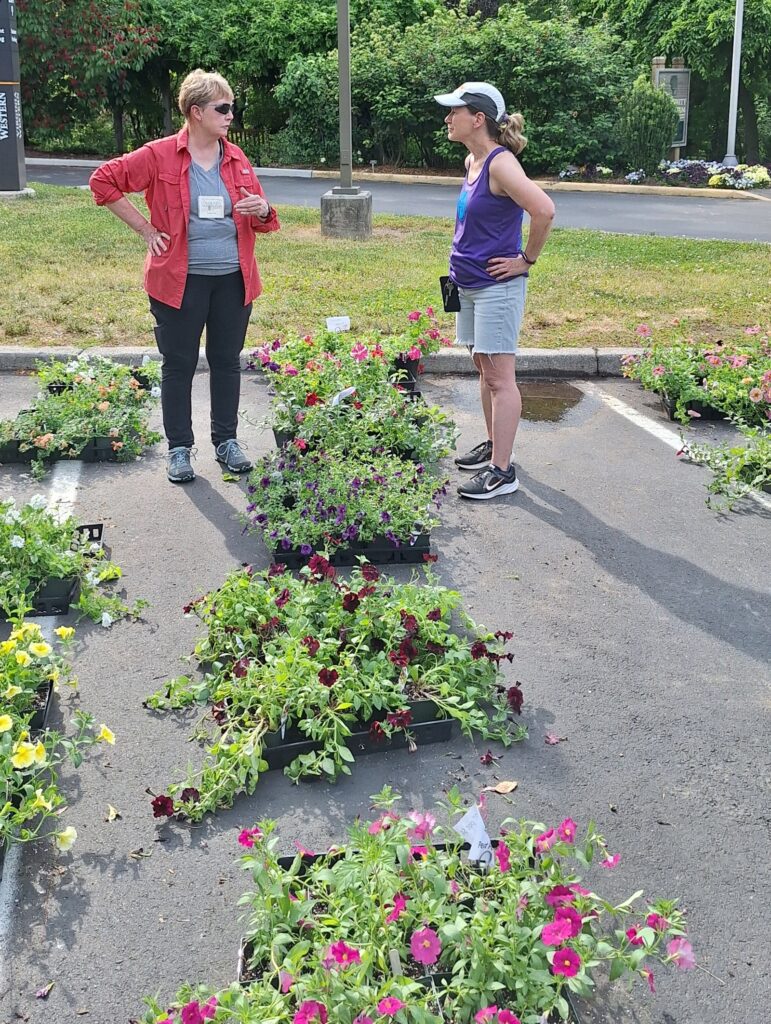
Volunteers are indispensable to the success of the plant sales as well as the general upkeep of the Arboretum, and more are always welcome. Currently a small core group of about 10 volunteers meet once to twice per week in the mornings or evenings to help with ongoing garden care such as weeding and maintenance.
Carla Selvey, who began volunteering after taking a Master Gardener class at Virginia West-ern 15 years ago, particularly enjoys pruning plants and caring for the Arboretum’s orchid collection.
“Come bring your clippers and you don’t have to know anything about it, they’ll tell you,” said Selvey. “There’s always work to do, and there’s the satisfaction of making this beautiful space. And you can say, ‘I helped make it beautiful.’ “
Another way to support the Arboretum is to become a member of the Friends of the Arboretum program. Support levels begin at $25 per individual, and membership privileges include “Friends Only” plant sale days, a seasonal newsletter and discounts on seminars, workshops, and special events.
The Arboretum continues to thrive thanks to a combined effort of staff, students, volunteers and loyal plant sale customers who understand that every donation helps it to grow and benefit the local community.
“There are lots of people who specifically will scope out the plant sales because they know where the plants came from, they know we took good care of them, and they like to support the program,” said Selvey. “Your money is going to support something that you can go visit every day, and it’s a learning opportunity for everybody.”
About the Arboretum
One way to support the gardens is to join the Friends of the Arboretum program. Support levels begin at $25 for an individual. Perks include a seasonal newsletter filled with horticulture insights and special members-only previews of the popular plant sales.
Fall pansy and perennial sale: late September
This sale is designed to keep area gardens colorful throughout the fall. Offerings include perennials and pansies (including the popular purple wave color) along with houseplants and vegetables.
Poinsettia sale: early December
In addition to poinsettias (which sell out quickly), the sale includes fresh-cut wreaths, centerpieces and swags. The 2025 poinsettia sale is Friday, Dec. 5, from 3-6 p.m., and Saturday, Dec. 6, from 10 a.m.-1 p.m.
Spring perennial plant sale: late March/early April
In addition to perennials, the sale includes succulents and tropical plants.
Spring bedding and vegetable plant sale: May
This is the biggest plant sale of the year, with offerings that include bedding and vegetable plants, herbs, hanging baskets and ferns.
Learn more about becoming an Arboretum friend.
(This story was published in the Winter 2026 edition of Impact magazine, a publication of the Virginia Western Community College Educational Foundation.)


